Friday, September 19, 2014

Reflection on Photo Essay


Without Sanctuary

           This is a very powerful photo essay.  Each one of the images is powerful enough to stand on its own.  The creator of the photo essay was able to put these images together to create something more powerful than if he had just used one or a couple of images.  With all these images combined,  we can understand how horrific our past was.  The title is also great.  It is vague, until you look at the photo essay and you realize what he means by saying "Without Sanctuary." 


Thursday, September 18, 2014

Photo Essay Rough Draft

PHOTO ESSAY ROUGH DRAFT


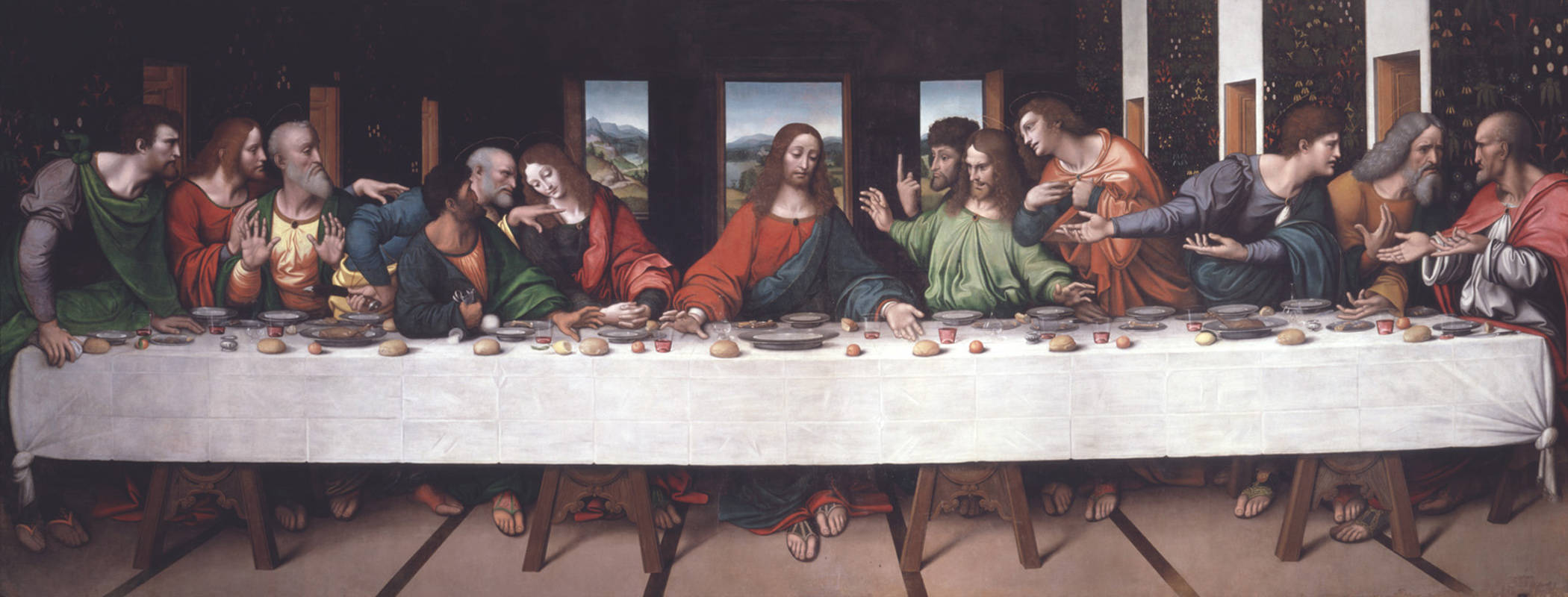
               My photo essay will be a critique on our society's worship and reverence to celebrity culture.  It seems like something that will be hard to do, but rewarding.  I plan to photo shop the faces of celebrities into some famous religious paintings.  The last image will be of "The Last Supper" with celebrity faces photo shopped onto the image.  It will be awesome to photo shop Angelia Jolie's face onto "The Birth of Venus."  This will likely take me a lot of time to do, but I am confident in my patience and my power to Google any problems I may have. The following is the start of my photo essay.  I plan to photo shop celebrities faces into these portraits.


Wednesday, September 17, 2014

MAPPING

     This was an interesting read.  I enjoyed the idea of creating art of political statements by creating maps. This is really a great time to bring up this topic.  About a week ago, my Political Sociology professor showed us these cities around the world.  These maps were bright and colorful.  They also served to prove his point about the government becoming more centralized and creating more organized cities as the years move on.


     This mapping technique clearly shows the progressing organization from the older cities to the newest in America.  Mapping is a very clever and quick way to show this information.  Just describing the change in the organization of cities doesn't make the idea clear enough.
     I loved the artist Biaussat and his "green line."  It sent a strong message about how arbitrary the border is and about how ridiculous it is that people are dying over it.


Sunday, September 14, 2014


      I am excited about this project.  There are a lot of different ways to take this.  If I was funny, I could come up with some parody of an iconic image, or I can use the project to criticize something.  I had a vague idea of using the image of "The Last Supper" and inserting the faces of celebrities as a way to criticize how we have begun to idolize them.  Obviously,  Mel Gibson would be in Jesus's place at the table.  I'm sure I can find an image of "The Last Supper" on Google Images as well as other celebrities.  The problem with this idea, is that there are only 13 people in it.  I feel like I can cram others into it.  It's still an idea in progress, one that I will probably change if I can come up with something better.


Wednesday, September 10, 2014

Ways of Seeing

               The Harrison article is very interesting.  Harrison is a writer who is attempting to explain the importance of images and words.  The argument is mainly that words and images work best together. She discusses the term "Semiotics."  This terms means the study of signs.  She also discusses three other terms.  The Icon, Index, and Symbol.  An icon bears a similarity to the real-world object.  The Index is when the concept and object work together to convey the meaning.  The last one is Symbol.  This may not look anything like the actual object, but through social structure, we all recognize the symbol to represent the object.  The article also discusses the importance for the author to create three things when merging words and images.  Representational, interpersonal, and compositional metafunctions.  Representational is basically what is in the image.  Interpersonal is more about how you interact with the image.  Compositional is how the image and words work together to create a meaningful whole.

ICON


INDEX

SYMBOL

             
                 The Berger video "Ways of Seeing" also held my attention.  In the part we watched, Berger discusses the strength of reproductions of art, and how there meanings change.  The exercise with the Goya is what I remember most.  He would put in a short clip or image, then show us a famous Goya painting.  Depending on the clip that preceded it, we felt different things. It changed the way we though about the painting.  When it showed the tied up black men followed by the Goya,  it made me feel quite differently then when he showed the ladies dancing.  

Monday, September 8, 2014


We chose to write about these abandoned homes.  The homes were taken with a straight on angle.  Most of the yard is showing in both images.  These images don't seem to be edited.  The homes were located in empty neighborhoods.  These images seem to convey a feeling of depression and giving up.  It illustrates the city decay of Detroit.  We also get a sense of how quickly people can lose their wealth and prestige.  Some of the homes in the blog are very big and could have been beautiful, but have fallen into ruin.  

Wednesday, September 3, 2014

      McCloud discuess several terms in his novel Understanding Comics. The discussion of what an “icon” signifies is interesting to me. McCloud makes the point that these icons often do not resemble the real thing at all, but are still accepted and understood by the masses. He also seperates these into subcatergories, such as pictorial icon. He makes the argument that we no longer think abstractly. We put things into categories and have trouble with things that don't resemble their counterparts.
     He also goes on to seperate the world into two other categories, the realm of the concept and the realm of the senses. He uses the example of the Tin Tin comics to clarify it. The use of a fantastical or unrealistic characters inserted into realistic environments.
     He also goes on to talk about how other authors use abstract characters to talk about deep issues or mature themes. McCloud reminded me of another comic book illustrator called Art Spiegelman. He used animals to portray the people and characters in his graphic novel about the holocaust. The novel was violent and graphic, but with the substitution of creatures for humans we were able to handle his violent and gruesome images of the concentration camps during WWII.

     Chapter six is also an interesting chapter. He discusses how we are forced to turn away from books with pictures with them and move on to books with words. Comics are able to fully utilize the power of both words and images. McCloud argues that this makes comics a different and, at times, more powerful then just words alone. This depends a lot on the artistic power of the illustrator. IF it is executed correctly, then the words and images complete each other.
     The Harrison reading was also interesting.  She discusses the term "semiotics."  This is a word that I had never heard before.  This means the study of signs.  She also breaks this down into similar categories like McCloud.  The other categories are the icon, index, and symbol.  An icon is similar to the thing being represented.  An index is something that may not look like the object, but we as a society have decided to use it to represent the object.  A symbol looks nothing like its counterpart, but we have learned to accept it.
     The Wysocki reading is similar to the McCloud, although it deals with visualization differently.  It discusses the many forms that letters can be a visual form of information.  She also lays out forms of examining the information on the page.  Such as looking at the page itself, what is on it, and what helps the reader to make connections. By looking at these, we can get more meaning.  An example Wysocki uses is using large type, such as thinking of the book as a children's novel.